Table of Content
The morning sun in Gujarat can be unforgiving. By 8 a.m., the heat already presses down on the fields. I once spoke with a farmer near Padra who said his biggest worry wasn’t the crop itself, it was “not knowing.” Not knowing the right price before sending the harvest. Not knowing whether a buyer would show up. Not knowing if the weather would flip tomorrow.
At that moment, he pulled out his phone. A simple chat window on WhatsApp showed him mandi rates from the nearest market. He nodded, almost casually, and said, “This is better than waiting three phone calls.”
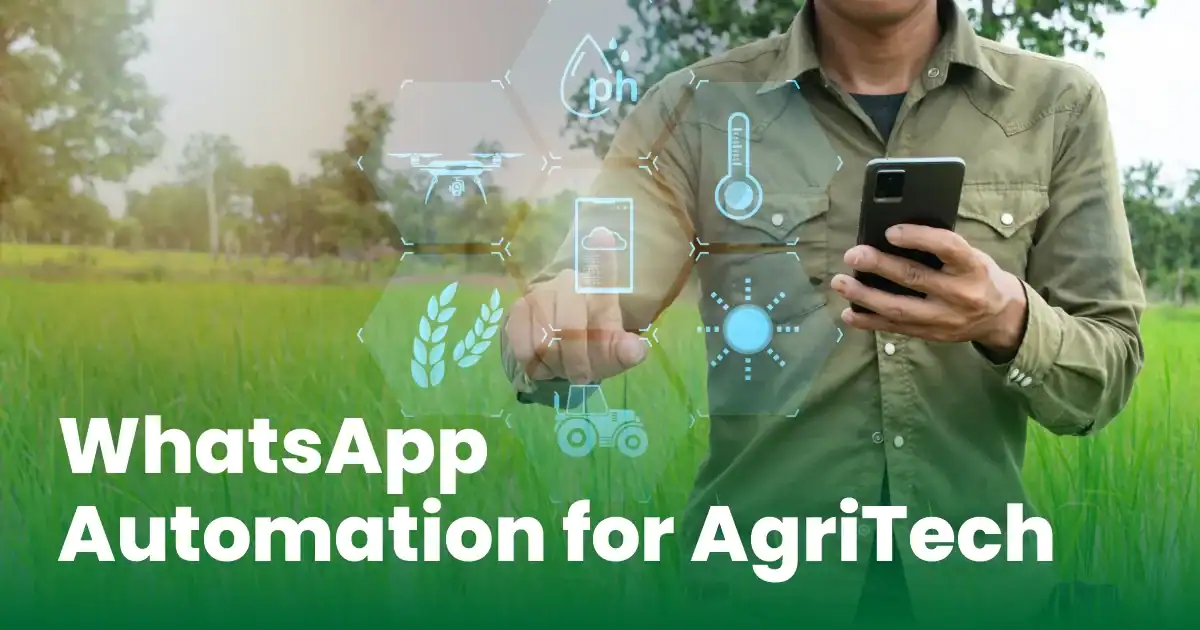
That’s the quiet shift happening today. It’s not about flashy machinery or big words. It’s about WhatsApp automation reaching farmers exactly where they already are.
The Biggest Challenges Farmers Face Today
If you really walk through villages, you’ll see the same problems on repeat. Crops ready but no trucks. Buyers negotiating hard because farmers don’t know the real market rate. Sometimes entire families waiting outside warehouses because paperwork takes forever.
It’s tiring. And the truth is, many farmers don’t have time for new apps or complicated dashboards. They prefer what’s already in their pocket. That’s why the idea of bringing AgriTech to WhatsApp feels natural, it doesn’t add an extra burden.
AgriTech Trends in 2025
This year, something different is visible. Small AgriTech startups in India are not just building software; they’re building conversations. Villages in Vadodara district now see WhatsApp groups buzzing not just with festival wishes but with daily crop tips, government updates, even fertilizer stock alerts.
It looks informal. But behind it, there’s structure. Farmers reply with voice notes in local dialects. Platforms send WhatsApp automated messages with timings for pesticide spraying or reminders for soil testing. Slowly, trust grows.
This is how WhatsApp automation for business in agriculture doesn’t feel like “business” at all. It feels like a friend texting you back when you need help.
5-Step WhatsApp Funnel to Onboard Farmers
It’s never a perfect funnel, but here’s how it really begins:
Step one: a farmer hears about a helpline on WhatsApp.
Step two: he sends a quick greeting “Kem cho?” in Gujarati.
Step three: he gets an instant reply, in the same language, asking about his crops.
Step four: he starts receiving updates, today’s rates, tomorrow’s weather, a note about subsidy deadlines.
Step five: he begins to depend on it. No training. No forms. Just chat.
That’s the power of a WhatsApp automation tool. From the outside, it looks basic; to those using it, it’s what actually solves the headache of scale .
Must-Have Tools for WhatsApp Automation in AgriTech
Let’s keep it local: Farmers want a WhatsApp automation tool that doesn’t ask for too much. Simple opt-in, local language choices, voice support. A bot that can book transport, find buyers, or ping loan deadlines. Best ones mix in YouTube videos, let farmers swap voice notes for help, and actually remember what you asked last week.
Imagine a small dal seller outside Vadodara using an automated WhatsApp message for business to confirm orders, send pick-up instructions, and even collect payments. No need for fancy CRM. Just WhatsApp, a clean interface, and quick replies. New crop info, festival alerts, if it’s not useful, nobody bothers .
How Dreamsdesign Helps AgriTech Brands Scale with WhatsApp Automation
You ask around, people like the practical approach Dreamsdesign offers. No jargon. They set up WhatsApp automations that sound like real people, not bots. Local dialects, real business needs. Raw orders, crop queries, supply chain coordination, it’s not flashy but it’s integrated.
Farmers tell stories of getting real-time updates on mandi prices; sellers use the system to confirm logistics and avoid those endless calls at midday when everyone’s busy. Dreamsdesign quietly powers these workflows, sets up custom WhatsApp automation for business, stitches it all together. It feels like having an extra pair of hands, but invisible. They support the little details, reminding you of scheme deadlines in Gujarati, not English, pushing video tips just before harvest, letting dealers run multiple conversations at once, so nobody’s left behind. From the outside, it looks basic; to those using it in Vadodara, it’s what actually solves the headache of scale .
Conclusion
If the fields are a little quieter these days, it’s only because alerts and updates come to your phone, not just over the fence. WhatsApp automation for business is here, sometimes simple, sometimes surprising and it’s helping real farmers, not just in fancy offices.
Thinking about it? Don’t wait for big conferences or consultants. Often the smallest tools, found through a local dealer, set up by someone who gets how things run in Vadodara, make the difference. It’s okay to ask for help. Next time you see an update ping at midnight, just know: things are starting to change, one message at a time .